We unite creatives,
researchers, and technologists to defend
the right to access information and express ideas freely.
We track censorship, reinstate blocked accounts, research patterns of suppression, and build creative tools that protect cultural, political, and bodily autonomy worldwide.
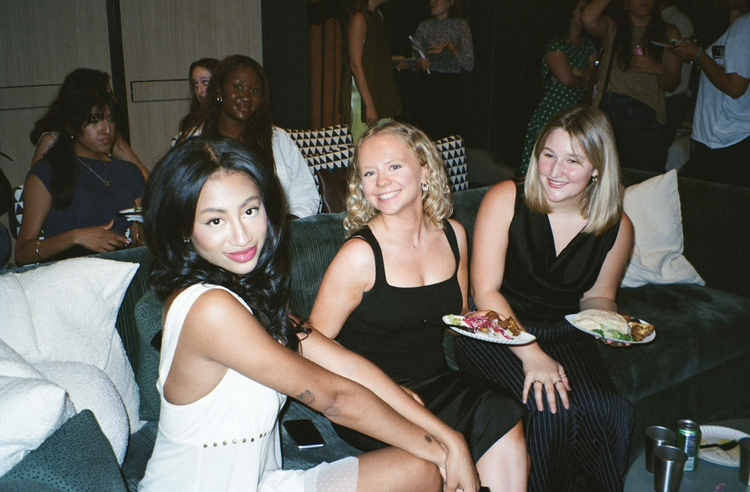
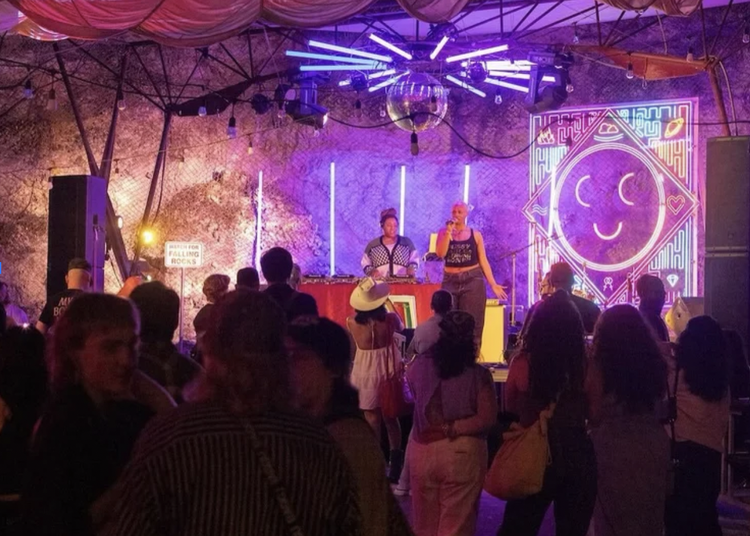
SX Festival Expo brings together creators, performers, brands, technologists, and industry leaders from around the world to explore the future of adult entertainment, sexual wellness, technology, and digital culture through talks, workshops, exhibitions, and networking.
European Parliament Press Conference Calls for Investigation into Meta Over Systemic Censorship Democratic Voices
A South Dakota law banning ads for pro-choice websites. Bills in Texas, Iowa, and South Carolina outlawing internet service providers from hosting websites with abortion pill information. A Texas university canceling a speech by an abortion provider. A professor demoted over a pro-choice op-ed.
The NGO Repro Uncensored accuses Meta of censoring more than 100 European civil society actors on Instagram. Among them are nine Berlin party organizers and clubs. What they all have in common is that they publish progressive, queer, and gender-related content.
Sex workers' and queer collectives' accounts are disappearing. Meta is flattening social media, and the grief is growing.
Meta targets reproductive rights: Five pro-choice organizations disappear from Facebook in a week.
When ‘simply being seen becomes political’: Meta’s crackdown on Australian LGBTQ+ accounts
The only thing consistent about the social media platform’s rules on showing naked body parts appears to be its inconsistency in enforcing them.
As the EU publishes its digital sovereignty plans, we've come up with a little techno-utopian package of our own. Our guest throughout is tech and solar-punk author Cory Doctorow: join us as we explore queer social media take-backs, French AIs, Finish super-computers, Croatian Wikipedia and all the reasons why this might just be the moment in which things start to change for the better.
Republicans in Washington often call the EU’s digital platform rules online censorship. For those working in adult industries, sex education and women’s health, the rules should be a tool to combat suppression of lawful speech online – but many say restrictions on their posts and accounts are only intensifying. Businesses, women’s health organizations, educators and […]
Comptes désactivés, publications supprimées, visibilité réduite... Des organisations de santé sexuelle, de droits reproductifs ou queer dénoncent une vague de restrictions sur Instagram. Plus de 130 signalements ont été recensés rien qu'en avril par l'organisation Repro Uncensored. En France, des programmes de Médecins du Monde sont touchés.
Dutch queer organisations and digital rights advocates are taking legal action against Meta in response to a wave of Instagram account removals targeting LGBTQIA+ venues, artists, publications and communities.
Meta moet stoppen met het zonder motivering blokkeren en verwijderen van queer-accounts op Instagram. Dat schrijven organisaties in een sommatiebrief aan de techgigant.
The legal action is being coordinated by reproductive rights advocacy group Repro Uncensored alongside Dutch digital rights organisation Bits of Freedom and several queer organisations and venues.
Meta moet binnen twee weken tekst en uitleg geven over het verwijderen van tientallen Nederlandse queer accounts in het afgelopen halfjaar van Facebook en Instagram. Als dat niet gebeurt, stappen de organisaties achter die accounts naar de rechter.
Meta Tientallen accounts van queerorganisaties, clubs en culturele initiatieven verdwenen de afgelopen maanden van Instagram. Een aantal accounts werd later weer hersteld. Nu eisen verschillende organisaties dat Meta stopt met het zonder uitleg blokkeren van accounts.
Meta denies claims it unfairly targets LGBTQ+ users as critics point to suspended queer and sexual wellness accounts.
What does it mean to be a woman on an internet where you can be stripped naked in one click?
The venue, which has operated on Oxford Street since 1989, said the account – followed by more than 5,000 people – was removed in March. Management said no content had been flagged before the suspension.
In this SRHM podcast episode, Eszter Kismődi speaks with Dr. Zahra Stardust, Martha Dimitratou and Kali Sudhra to reflect on what happened behind the cancellation of RightsCon 2026 and why this matters profoundly for sexual and reproductive health and rights (SRHR), digital justice, and democratic participation globally.
Censuur Zonder waarschuwing verwijderde Meta ze: Instagramaccounts van queerclubs, nachtclubs en activistische organisaties, soms met tienduizenden volgers. „Je beseft pas hoeveel macht Meta heeft, als ze alles van je afpakken.”
Techgigant Meta heeft opnieuw tientallen Instagramaccounts van onder meer queer organisaties en individuen verwijderd. Ook accounts van de Nederlandse organisaties The Queer Agenda, Club Church en gaysauna Nieuwezijds zijn offline gehaald. In december blokkeerde Meta ook al tientallen accounts zonder uitleg.
Instagram heeft de afgelopen weken ruim honderd accounts uit onder meer de lhbtiq+-gemeenschap verwijderd. Nederlandse clubs zijn radeloos en verzuchten dat ze geen contact krijgen met Meta.
-
Advocacy
We campaign globally for the free flow of information. We work to ensure access to accurate resources on health, rights, and care without barriers or discrimination.
-
Education
Our network organizes educational workshops, panel events, and fosters partnerships with global organizations to expand outreach and information sharing.
-
Monitoring & Response
We track and respond to censorship in real time, equipping organizations and communities with tools to restore access, while sharing expertise with partners to advance digital rights.
I think you might know the feeling: The conversation you were in just turned to static. Your cheeks flush. Your stomach drops. You hear yourself say, What the fuck?
Your account has been erased.
I've spent years talking to artists, activists, and creators whose work has disappeared in that gut-wrenching instant. No amount of experience, careful wording, backup plans or familiarity with platform rules really prepares you for it. It always feels surreal. One second you're there; the next you're gone, trying to prove you ever existed at all.
Facebook launched in 2004. By 2009 it had 300 million users. Today it has over three billion monthly active users and data going back nearly two decades. That data includes not just what people posted but what they liked, who they were friends with, how their social networks shifted, how their political views evolved, what they searched for, what ads they clicked, what they scrolled past. It is the most comprehensive longitudinal record of human ideological development ever assembled. For hundreds of millions of people, it begins at the moment they first encountered the internet.
Two weeks ago, we participated in the Berlin Process Gender Equality Forum in Sarajevo, joining more than 150 representatives from governments, parliaments, academia, civil society, gender equality institutions, international organizations, and development partners from across the Western Balkans
Amid an escalating crackdown on LGBTQI+ communities in Türkiye, Repro Uncensored, the International Planned Parenthood Federation (IPPF), ÜniKuir Association and Kaos GL are raising alarm over the suspension of more than 120 LGBTQI+ and feminist social media accounts across major social media platforms beginning on 19 June 2026, according to documentation compiled by Turkish civil society organizations.
Despite years of online censorship, sex workers are not flocking to decentralised social media. Drawing on interviews conducted at Berlin's SXFestival Expo 2026, this article explores why governance alone is not enough—and why audience, discoverability and economic opportunity continue to keep creators tied to Big Tech platforms.
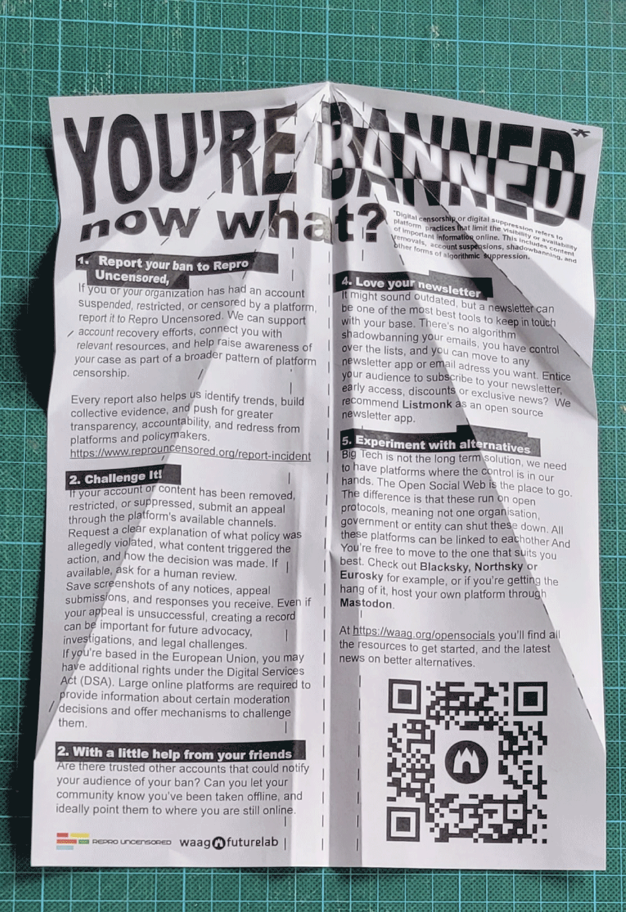
Digital censorship or digital suppression refers to platform practices that limit the visibility or availability of important information online. This includes content removals, account suspensions, shadowbanning, and other forms of algorithmic suppression.
Social media has become one of the primary ways people learn about health, relationships, and their bodies. Increasingly, it is also where people encounter information—and misinformation—about contraception and reproductive healthcare.
Fable 5, the “most powerful AI model ever made”, was released by Anthropic on June 9, then promptly retracted just three days later. While it was live, Fable 5 downgraded results about gender affirming healthcare information to Opus 4.8, its former leading model at the time.
Japanese visual artist Minori Murata works across CGI, video, installation, and interactive media to explore the relationships between technology, consumer culture, ecology, and collective belief. Known for creating immersive digital worlds that blur the boundaries between nature and the virtual, Murata’s work examines the systems that shape what we see and what remains hidden.
The Trump administration has failed to move the needle on its goal of boosting US declining birth rates and reversing the "fertility crisis," which Health and Human Services Secretary Kennedy recently called "a threat not only to our economy, to our national security," and Dr. Oz said has left a third of Americans "under-babied."
Amid Repro Uncensored and Dutch Queer Groups’ Landmark Legal Action Against Meta, Australian Organizations Warn Similar Cases Could Build Toward Future Legal Action
At Women Deliver 2026 Conference, a new declaration frames gender inequality as a systemic crisis and calls for a rebalancing of power across institutions. But does it go far enough in addressing who controls visibility, information, and participation today?
Repro Uncensored, Bits of Freedom and Dutch Queer Organizations Issue Legal Demand Against Meta, Escalating Pressure for a European Class Action
Meta quietly announced via the help center it is removing end-to-end encryption (E2EE) from Instagram messages on May 8, 2026. E2EE messages and calls ensure only you and the people that you're communicating with, can see or listen to your messages, and no one else can.
The cancellation comes at a time of growing global rollback on fundamental rights, including freedom of expression, access to information, and sexual and reproductive health and rights (SRHR). Many organisations including Repro Uncensored and International Planned Parenthood Federation, were set to speak at RightsCon, with dozens of sessions focused on censorship, platform governance, and access to reproductive health information online.
At Women Deliver 2026 Conference, a new declaration frames gender inequality as a systemic crisis and calls for a rebalancing of power across institutions. But does it go far enough in addressing who controls visibility, information, and participation today?
From the exclusion of the Gnostic texts to the ranking of content online, institutions have long determined which narratives are visible, legitimate, and preserved—and which are buried, discredited, or erased.
In Benin, abortion is legal under one of West Africa’s most progressive laws, yet access remains uneven. Financial barriers, inconsistent pricing, and gaps in implementation continue to shape whether women and girls can actually obtain care, turning a legal right into a deeply unequal reality.
In Leticia, Colombia, where healthcare often travels by air or river, cervical cancer screening reveals what access looks like beyond telemedicine. This piece explores how prevention, infrastructure, and follow up care operate in one of the country’s most geographically isolated regions, and what it means to build health access where systems are limited but the need is urgent.
At CSW70, one thing was clear: without civic space, rights cannot be defended. As backlash grows globally, the ability to organize, speak, and access information is increasingly under threat, especially online. Protecting civic space is essential to protecting gender justice.
A collective framework for rethinking how platforms govern sex, sexuality, and visibility online, outlining concrete principles for building more equitable, accountable, and sex-positive digital environments.
From facial recognition bias to AI-generated sexual violence and reproductive health censorship, digital systems increasingly shape how women’s bodies and voices appear online. As platforms prioritize engagement and profit, algorithmic infrastructures are amplifying exploitation, surveillance, and the silencing of feminist and reproductive health information.
This piece examines the Wikimedia Community User Group Senegal and how feminist librarians are working to document Senegalese knowledge, archives, and languages across Wikipedia and other open platforms.
A research and community intervention project piloting HPV self-screening in cultural spaces to decentralize preventative reproductive healthcare and expand equitable access in partnership with ProDx Health.
A leaked revision of Indonesia’s Broadcasting Bill suggests an expansion of state-style oversight into digital platforms and creator content.
The RU Collective
We are building a decentralized, participatory online democracy where communities can share knowledge, document harm, and collectively shape strategies beyond Big Tech platform control.
UNCENSORED @
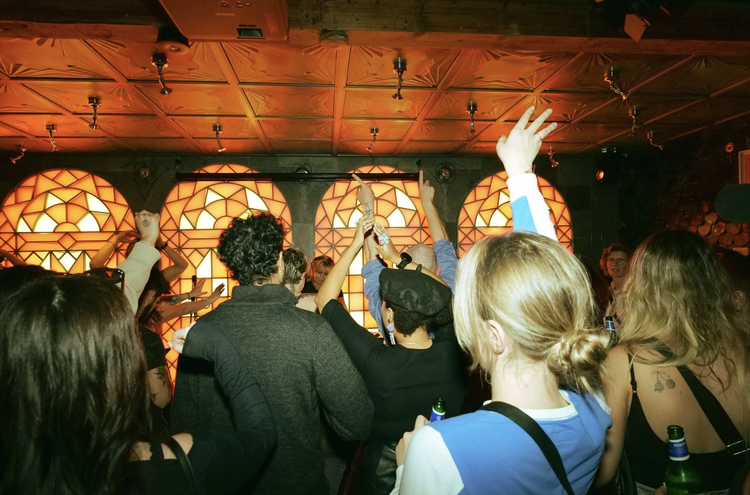
A worldwide series that brings together artists, activists, and communities to celebrate feminist culture and confront the systems that restrict our bodies, our voices, and our information. Each edition creates space for connection, creativity, and collective resistance, in partnership tons of global and grassroots partners.